Kitchen Exhaust System Cleaning
- Hood canopy interior and exterior pressure wash and degrease
- Plenum cleaning with hand-scraping and pressure wash
- Accessible ductwork cleaned from below and from rooftop access
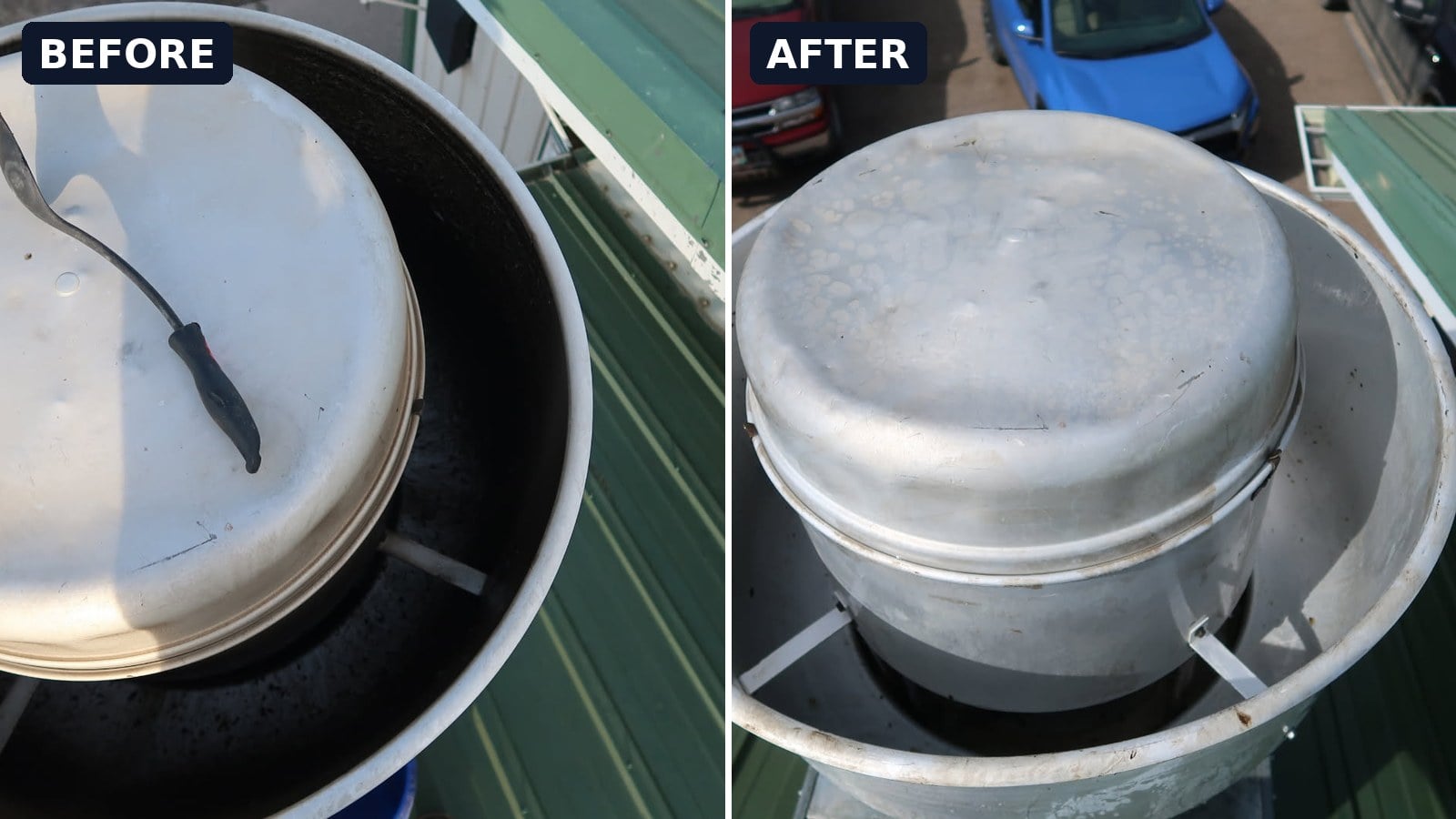
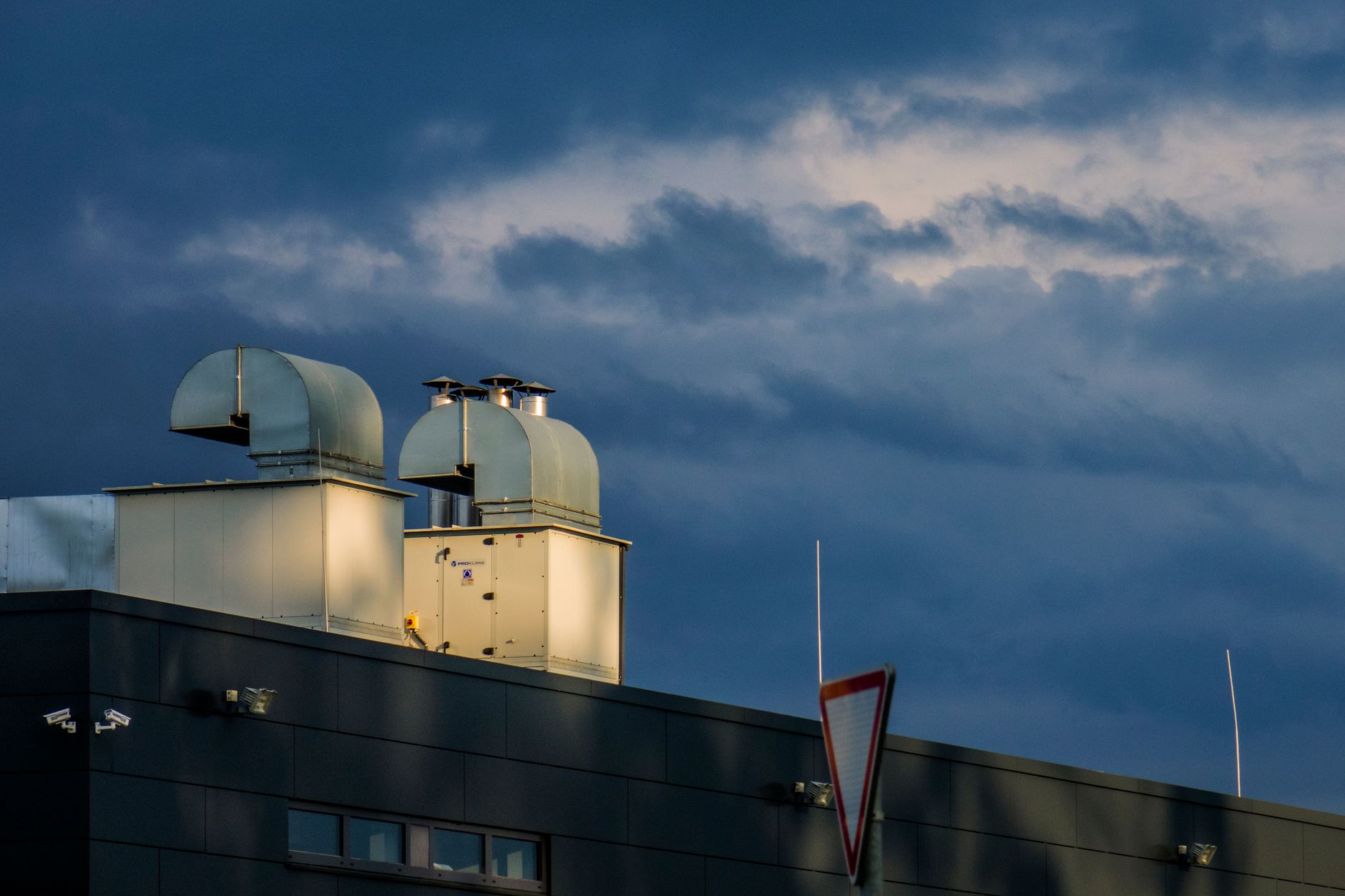
- Rooftop exhaust fan housing and blade cleaning
- Before and after photo documentation
- Written service report and compliance sticker for the hood
- Grease and wastewater contained and hauled off-site
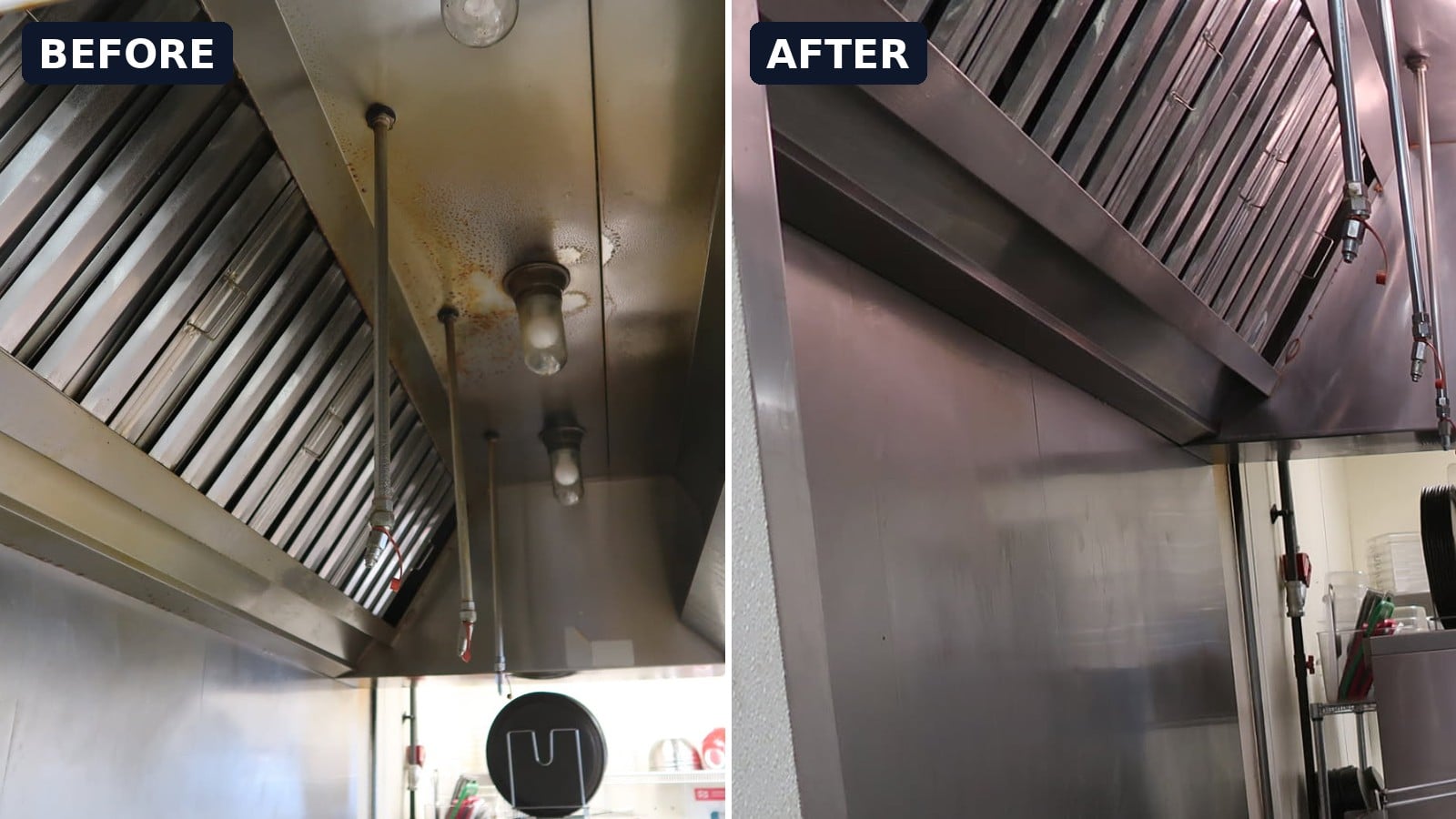
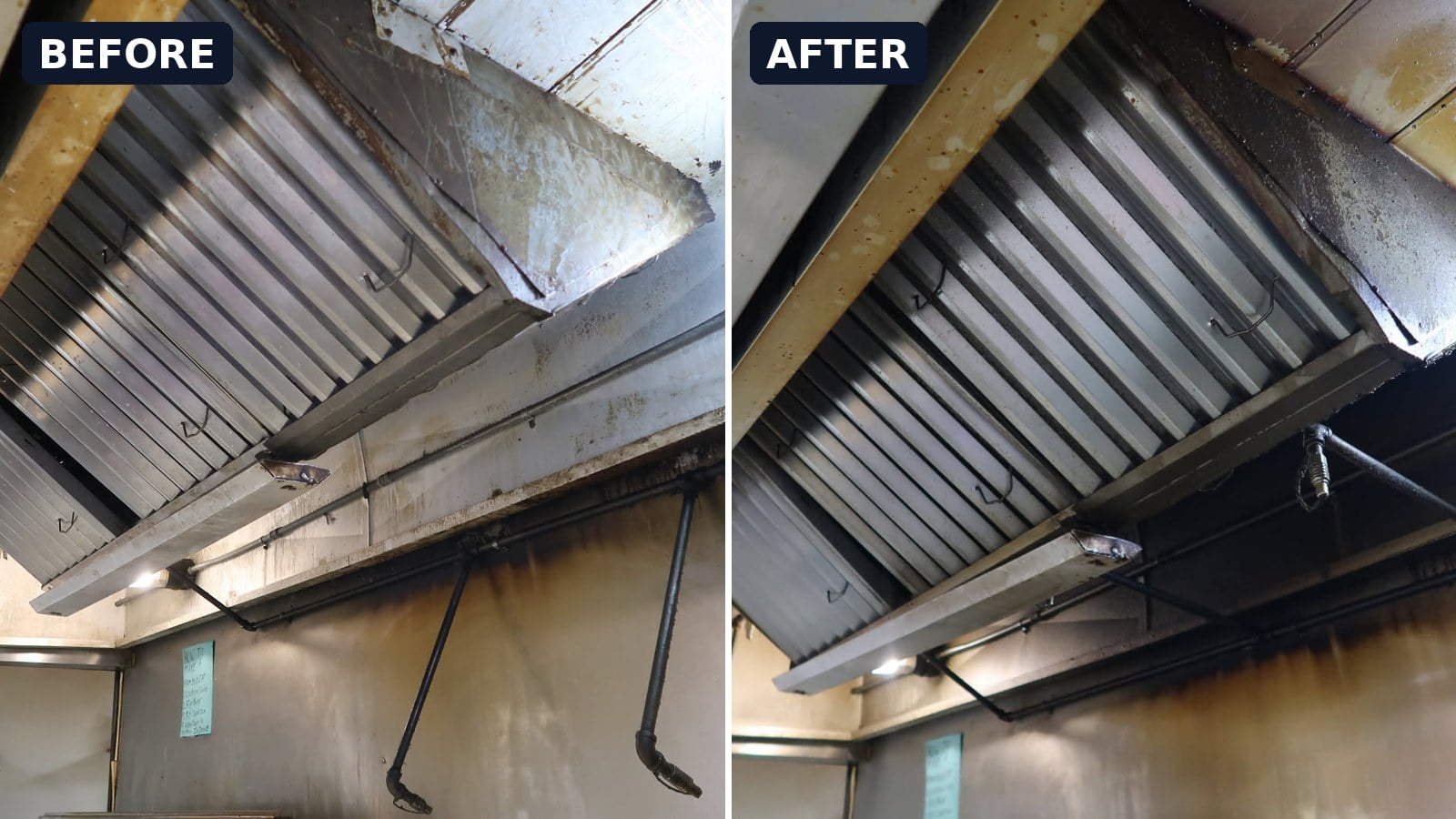


The exhaust system pulls smoke, steam, and grease-laden vapor out of your kitchen. Over time, grease builds up on every surface — the hood interior, the plenum above the filters, inside the ductwork, and on the fan blades up on the roof. That buildup is fuel. NFPA 96 is the fire code standard that governs how often you need to clean based on your cooking volume.
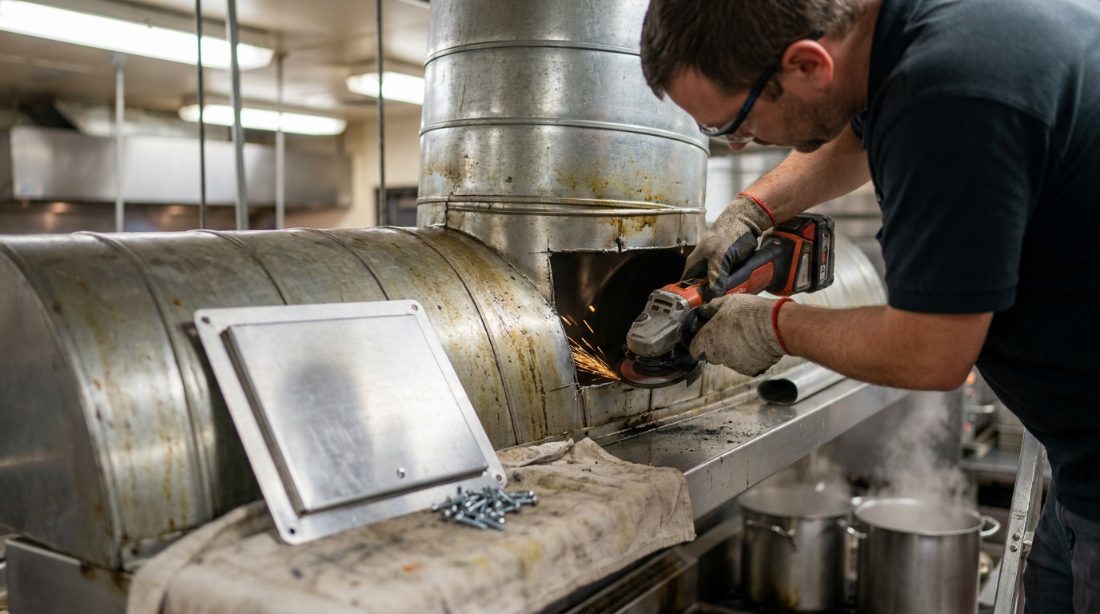
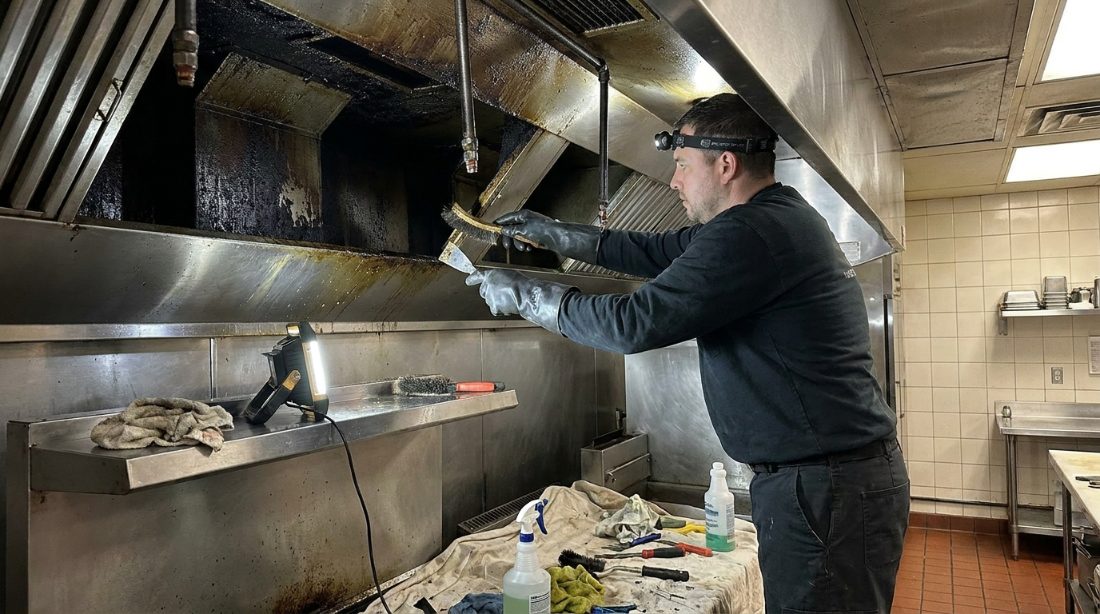
We hand-scrape the heavy buildup first, then pressure wash with degreasing solution at temperature. We clean the hood canopy inside and out, pull and degrease the plenum, scrub accessible duct from below and from the roof access, and clean the exhaust fan housing and blades. If there's no roof access hatch or if access panels are missing in the ductwork, we note it in the report — some systems were installed without code-compliant access, and we can install panels separately if needed.
“NFPA 96 sets the cleaning frequency based on your cooking volume — monthly for high-volume operations, quarterly for moderate, semi-annually for low-volume.”
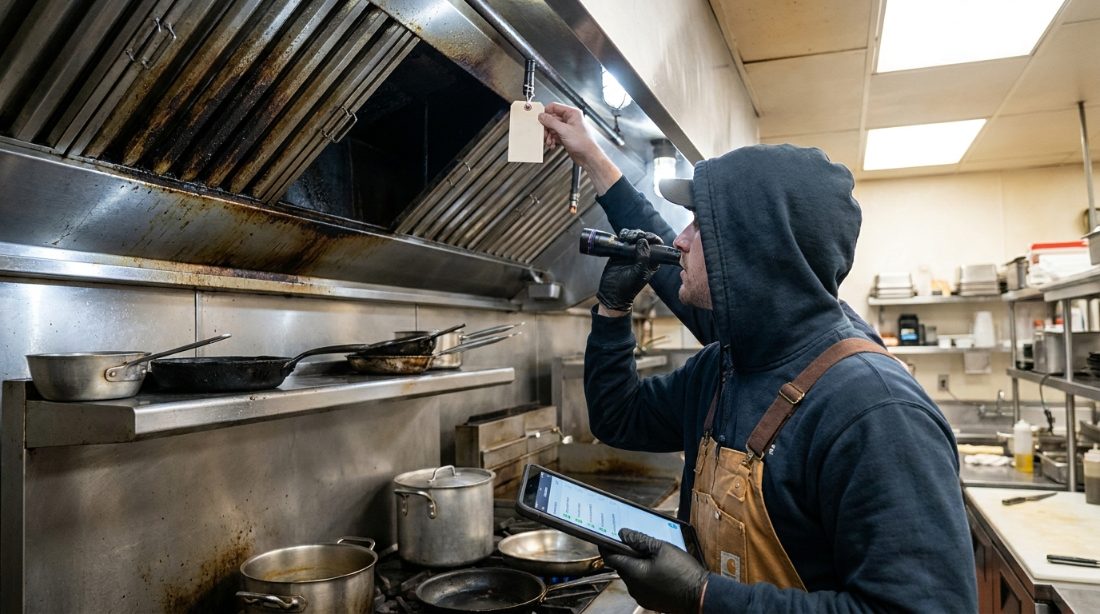
The job usually takes 2 to 4 hours for a standard single-hood system. Larger kitchens with multiple hoods or heavily soiled systems take longer. We work around the restaurant's schedule so you don't have down time in your kitchen. Kendall & Nicole schedule every job personally and is on-site for the walk-through. At the end, you get before and after photos, a written service report, and a compliance sticker with the cleaning date and our contact info. That documentation is what the fire marshal and health inspector want to see, and it's what your insurance carrier asks for if there's ever a claim.
NFPA 96 sets the cleaning frequency: monthly for high-volume operations like 24-hour diners, charbroiler-heavy kitchens, or any operation using solid fuel. Quarterly for moderate volume — standard restaurants doing lunch and dinner service. Semi-annually or annually for low-volume operations like churches, senior centers, or day camps. We'll assess your operation during the first visit and recommend a schedule. If you're not sure what your interval should be, we can measure grease depth in the duct and adjust from there.
We serve restaurants, schools, hospitals, and any commercial kitchen across central and northeast South Dakota. Travel time is included in the service rate for most locations within 150-200 miles. If you're farther out, there may be a travel charge — we'll let you know when you call for a quote.
All grease and wastewater are contained and hauled off-site. We don't put it down your drains. We cover floors and equipment before we start, and we clean up when we're done. If we find issues during the cleaning — damaged ductwork, missing access panels, a fan that's failing — we note it in the report and provide recommendations. Some deficiencies are immediate fire hazards; others are maintenance items that should be addressed at the next cleaning.